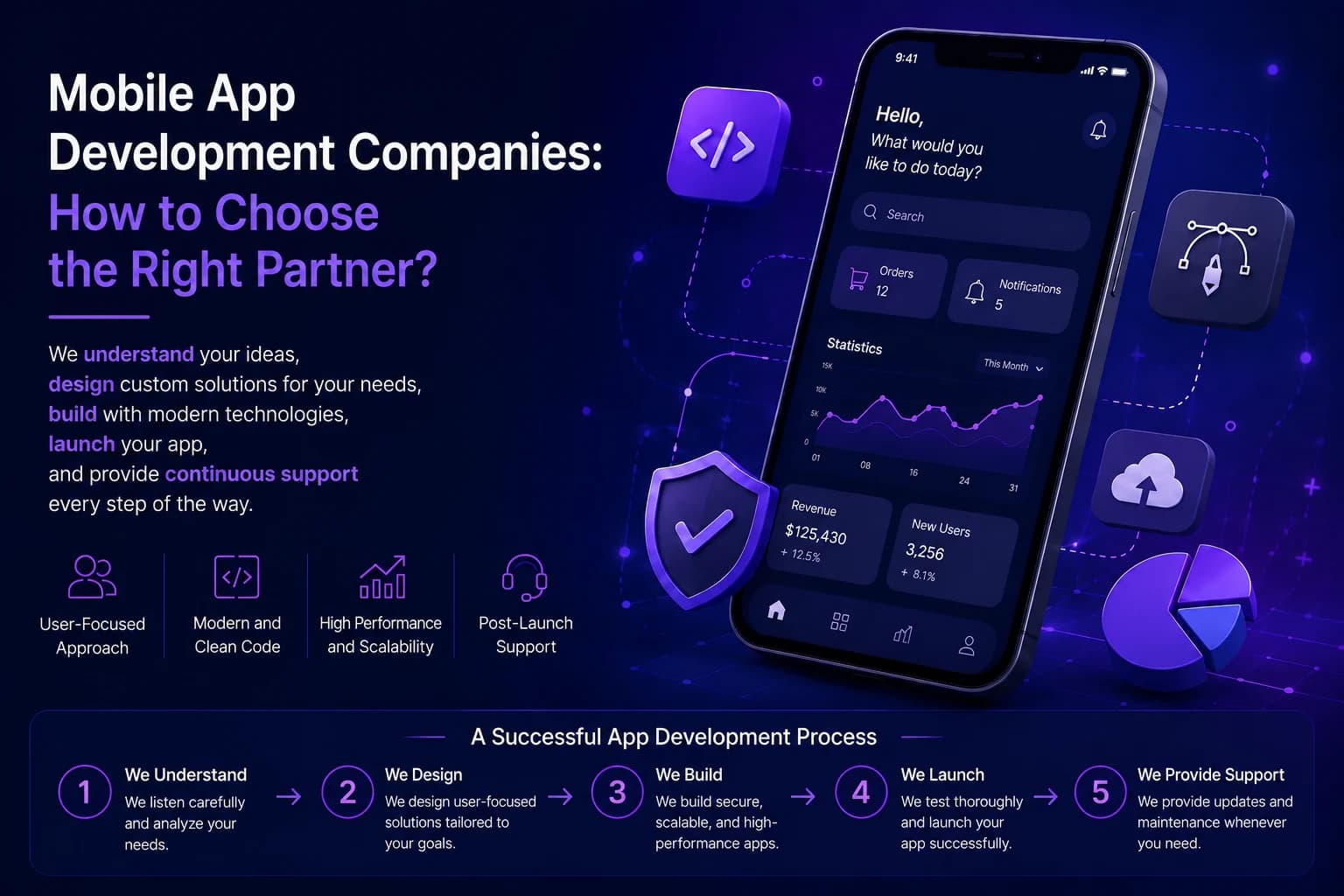
Building a mobile app isn't just about coming up with an idea and kicking off a development process. What truly matters is turning that idea into a product users genuinely want to use — one that adds real value to your business and can keep evolving for years to come. This is where the mobile app development company you choose becomes one of the most important factors behind your project's success.
Today, many companies claim to offer mobile app development services, but not every team follows the same approach. Some focus solely on delivering the app, while experienced teams analyze the project idea, evaluate user needs, determine the right technology, and keep supporting the app's growth after launch.
What Do Mobile App Development Companies Actually Do?
A professional mobile app development company is not just a team that writes code. A good partner:
- Analyzes your project's needs.
- Plans the user experience (UX) as a priority.
- Builds a modern, scalable software architecture.
- Develops high-performance apps for both Android and iOS.
- Addresses security, performance, and sustainability together.
- Provides ongoing maintenance, updates, and improvements after launch.
Behind every successful app is not just good design, but also the right planning and a solid technical foundation.
What to Look for When Choosing a Mobile App Company
Mobile app development is a long-term investment. That's why the company's approach and technical competence matter just as much as price.
When choosing the right company, it helps to look for answers to these questions:
- Does the app just work, or is it genuinely fast and performant?
- Do they use a clean, maintainable software architecture?
- Do they provide technical support after the project is completed?
- Do they build solutions tailored to your needs, or rely on ready-made templates?
Working with a team that answers these questions well brings a significant advantage in both cost and time over the long run.
Modern Mobile Apps for Android and iOS
Today's users expect apps that are fast, secure, and smooth. That's why performance, user experience, and scalability need to be top priorities in modern mobile app development.
An app built with the right technologies:
- Launches faster.
- Consumes fewer resources.
- Makes it easier to add new features.
- Stays up to date for years to come.
- Delivers a consistent experience across different devices.
This approach both increases user satisfaction and makes it easier for businesses to adapt to their future needs.
Proper Planning Before Building a Mobile App
Most successful apps come from proper planning done before the development process begins. Defining the target audience, mapping out user scenarios, and analyzing needs are among the most critical stages of the software process.
That's why professional mobile app development companies approach a project not just as software, but from a product development perspective.
Why You Should Work With the Right Mobile App Company
A mobile app can be one of your brand's strongest representatives in the digital world. An app built with the right team is designed not just for today, but as a digital product that can keep growing into the future.
Whether you're launching a new startup or planning a mobile app for your existing business, working with an experienced, transparent mobile app company that offers long-term support will significantly increase your project's chances of success.
A quality mobile app isn't made of code alone. When the right strategy, a strong user experience, modern technology, and a sustainable software foundation come together, the result is a product users genuinely enjoy using — one that delivers real value to businesses. That's why the most important decision in mobile app development is choosing the right team to entrust your project to.
If you want to clarify scope, ownership, and the post-launch plan before requesting a proposal, review our process and references or contact us.